Writing Research Paper Drafts With Gatsbi
— Gatsbi
Developing a research paper means connecting a clear question, documented methods, findings and sources. Gatsbi can help turn those materials into a structured draft, leaving the author to evaluate the research and verify the text. This article introduces the product’s writing role and the checks that belong alongside it.
Gatsbi combines research ideation and writing workflows. Its TRIZ-inspired ideation can suggest approaches to investigate, while its writing tools can help organize supplied research materials. A generated idea is a proposal, and a generated manuscript is a draft; neither establishes novelty or research credibility by itself.
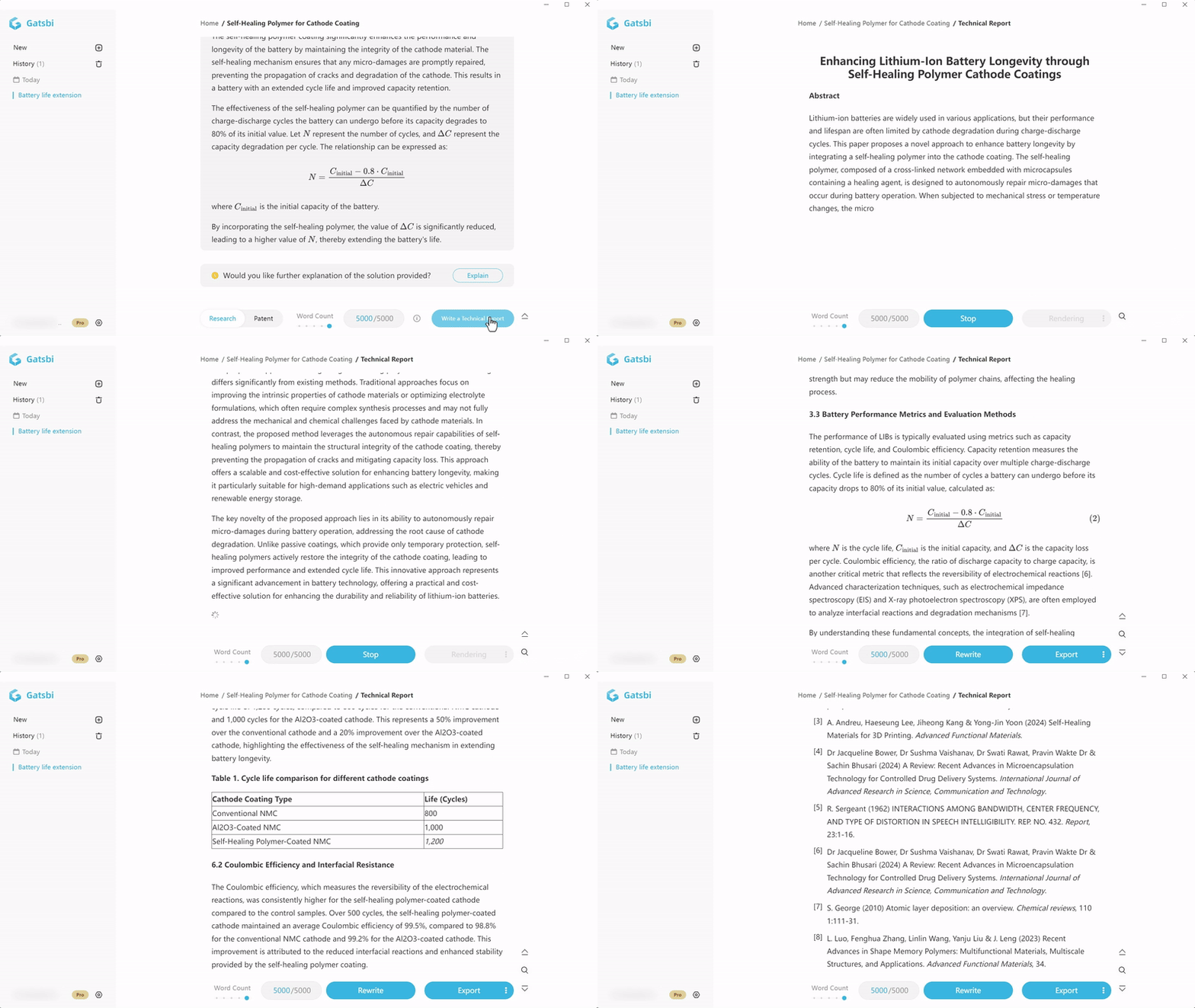
How Gatsbi Can Support Research Writing
- Explore possible approaches. Use structured ideation to consider alternatives to a technical problem. Check proposed research gaps against relevant literature and distinguish a plausible suggestion from a tested contribution.
- Organize a manuscript draft. Start with your research records and inspect the resulting abstract, methods, results and discussion for consistency. Missing study details should remain unresolved until you can supply them.
- Prepare invention-disclosure material. A disclosure draft can organize technical notes for internal or professional review. It does not file an application or establish patentability.
- Review citations and visuals. Open cited sources, verify the statements they support, and inspect equations, labels and units. Check the exported reference list as well as citations in the text.
- Adapt the workflow to your field. Provide the conventions and evidence needed for the intended paper. Evaluate the result against disciplinary and submission requirements rather than assuming that one workflow fits every study.
Who Might Find the Workflow Useful?
- Researchers and academics: Organize verified research materials and revise a draft while preserving the underlying evidence.
- Graduate students: Develop an outline and clearer explanations from their own work, following supervision and institutional requirements.
- Inventors and R&D teams: Prepare an internal disclosure draft for technical checking and discussion with a patent professional.
Start With a Small, Checkable Draft
Try one section using material you understand well. Check the question, methods, numerical values, citations and interpretation, then inspect the exported document. This shows where the workflow is useful and where it still requires manual correction.
Follow the Gatsbi Writer tutorial to draft from existing research notes, or visit Gatsbi to explore the product.